1,049 schools · 190,755 students
Full Primary
Years 1–8 schools that carry children all the way through primary without a separate intermediate step.
Full Primary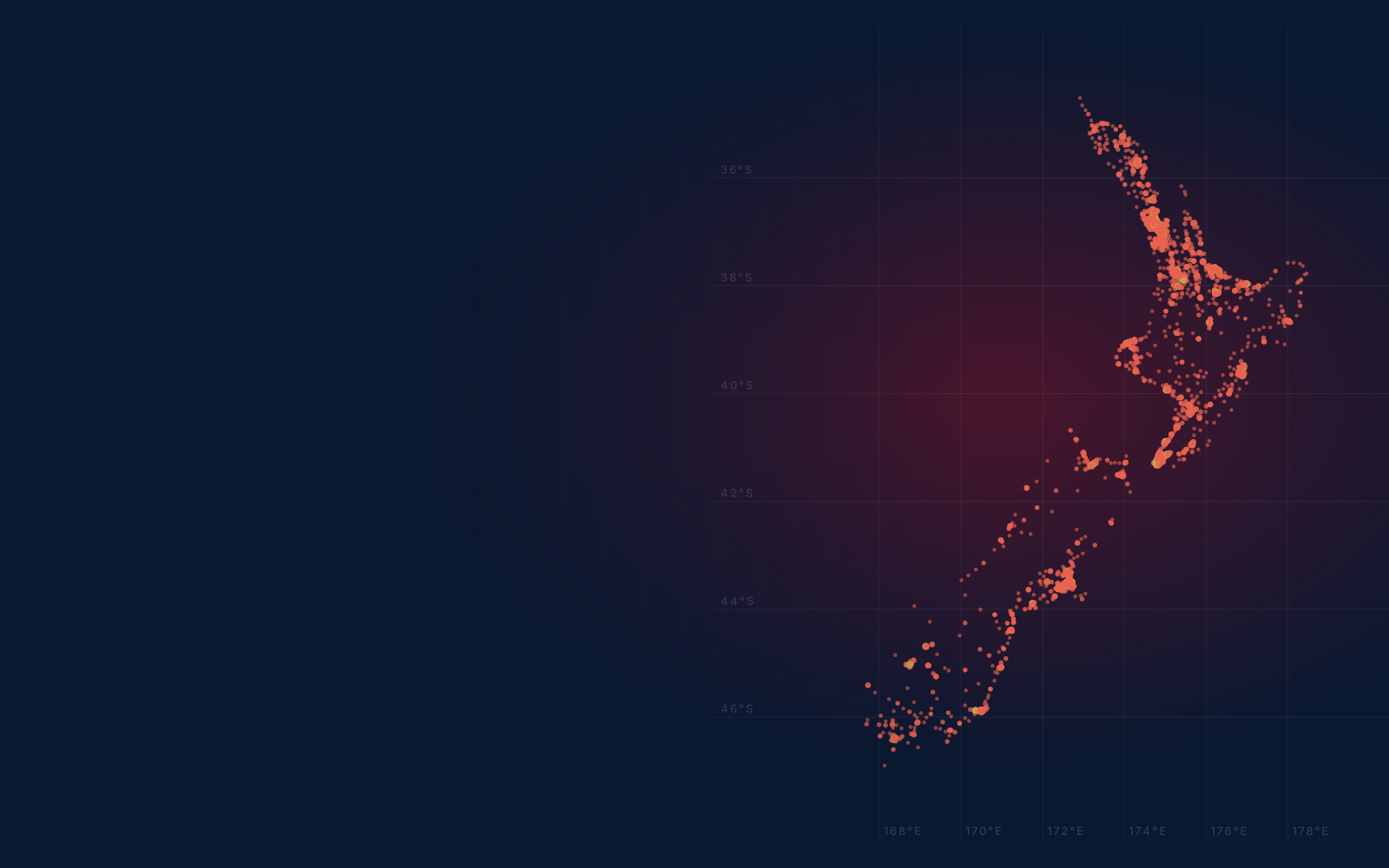
Roll numbers, Equity Index, ethnic composition, contact details and qualification results for 2,578 schools and 4,376 early childhood centres — searchable, filterable and free to use.
New Zealand has 2,578 schools across 18 regions. The fastest way in is usually where you live — then narrow by schooling level, gender and funding type.
305,694 students · 1,416 ECE services · Auckland, Papakura, Pukekohe
0288,257 students · 482 ECE services · Hamilton, Cambridge, Tokoroa
03106,964 students · 491 ECE services · Christchurch, Ashburton, Timaru
0490,802 students · 407 ECE services · Wellington, Lower Hutt, Porirua
0541,732 students · 233 ECE services · Palmerston North, Whanganui, Levin
0658,710 students · 353 ECE services · Tauranga, Rotorua, Whakatane
0731,778 students · 205 ECE services · Whangarei, Kaikohe, Kaitaia
0834,961 students · 178 ECE services · Dunedin, Oamaru, Queenstown
0930,436 students · 212 ECE services · Napier, Hastings, Wairoa
1021,581 students · 108 ECE services · New Plymouth, Stratford, Hāwera
1116,858 students · 81 ECE services · Invercargill, Gore, Winton
128,934 students · 66 ECE services · Gisborne, Ruatoria, Tokomaru Bay
137,830 students · 45 ECE services · Motueka, Richmond, Tasman
144,387 students · 21 ECE services · Greymouth, Westport, Hokitika
157,001 students · 37 ECE services · Blenheim, Picton, Canvastown
168,767 students · 37 ECE services · Nelson
1776 students · 1 ECE services · Chatham Islands
1848 students · 3 ECE services · Auckland
From contributing primary schools to full secondary schools and specialist settings — every schooling level in the New Zealand system.
Years 1–8 schools that carry children all the way through primary without a separate intermediate step.
Full PrimaryYears 1–6 contributing schools — the first stage of primary schooling, usually your local neighbourhood school.
ContributingFull secondary schools serving Years 9–15, where NCEA Levels 1–3 and University Entrance are completed.
Secondary (Year 9-15)Composite schools covering a wide year range on a single campus, from new entrants through to Year 10.
CompositeSecondary schools that start at Year 7, combining intermediate and secondary on one campus.
Secondary (Year 7-15)Years 7–8 intermediate schools, the two-year bridge between primary and secondary.
IntermediateEvery school gets its own page: roll composition by ethnicity, Equity Index against the national average, isolation, enrolment scheme, boarding, language of instruction, opening year, nearby schools and full contact details.
Combine keyword search with region, type, authority, gender, urban or rural, boarding, enrolment scheme, Equity Index band and roll size. Sort by roll, Equity Index or age, and share the filtered URL.
NCEA Level 1–3 and University Entrance attainment for every region, year on year, taken straight from published Ministry of Education statistics — with plain-English explanations of what the numbers mean.
National attainment for the most recent academic year held in the published statistics, with the full 180-record series available on the results pages.
The directory records 46 new schools and 51 closures in the current published cycle, along with mergers, name changes and school type changes. If a school near you is affected, you will find it here first.
Choosing a school is never only about the numbers. But the numbers tell you where to start.
Every school page combines the Ministry of Education school directory with published roll data: contact details, street address, school type, authority, co-educational status, roll size and ethnic composition, Equity Index, isolation index, enrolment scheme status, boarding facilities, language of instruction, opening year and the region and territorial authority the school sits in.
Roll and directory fields are drawn from the school directory export dated 1 September 2026. Qualification attainment statistics follow the Education Counts release schedule. Where a figure changes between exports, the directory page is regenerated from the latest file.
The Equity Index measures the socio-economic challenge a school's community faces, using student-level indicators rather than area averages. A higher score means greater need and a larger share of targeted funding. In this directory the national range runs from about 344 to 569, with a mean of 463. It is not a measure of school quality.
Yes. The school directory supports keyword search plus filters for region, school type, authority, co-education, urban or rural setting, language of instruction, boarding, enrolment scheme, Equity Index band, roll band and opening decade — and can sort by name, roll, Equity Index or age.
Yes — there are 4,376 early childhood services in the ECE directory, including kindergartens, kōhanga reo, playcentres and education and care services, with age-group rolls, 20 Hours ECE eligibility and funding type.
The NCEA results pages reproduce national and regional attainment rates for NCEA Levels 1–3 and University Entrance published by the Ministry of Education, including cumulative rates for students leaving school with a qualification.
Search 2,578 New Zealand schools by name, town or region — then filter by schooling level, gender, funding, roll size and Equity Index.